Photo by Luke Chesser on Unsplash
Your Google Ads dashboard says you've spent £3,500 this month with a brilliant 4.2 ROAS. Your email platform reports a 32% open rate. Facebook claims your engagement is up 18%. Everything looks great, right?
Here's the uncomfortable truth: there's a decent chance your metrics are lying to you. Not because the platforms are deliberately misleading you, but because incomplete data, duplicated conversions, and fragmented tracking are giving you a distorted view of reality. And every pound you invest based on dodgy numbers is a pound at risk.
Let's fix that before you commit another marketing budget.
Why Your Marketing Metrics Can't Be Trusted
The core issue boils down to data integrity: or the complete lack of it. Most UK businesses collect data from a patchwork of sources: Google Analytics, Meta Business Suite, email marketing platforms, LinkedIn Campaign Manager, and whatever else is in the mix. Each platform reports its own version of success using its own attribution model.
Photo by 1981 Digital on Unsplash
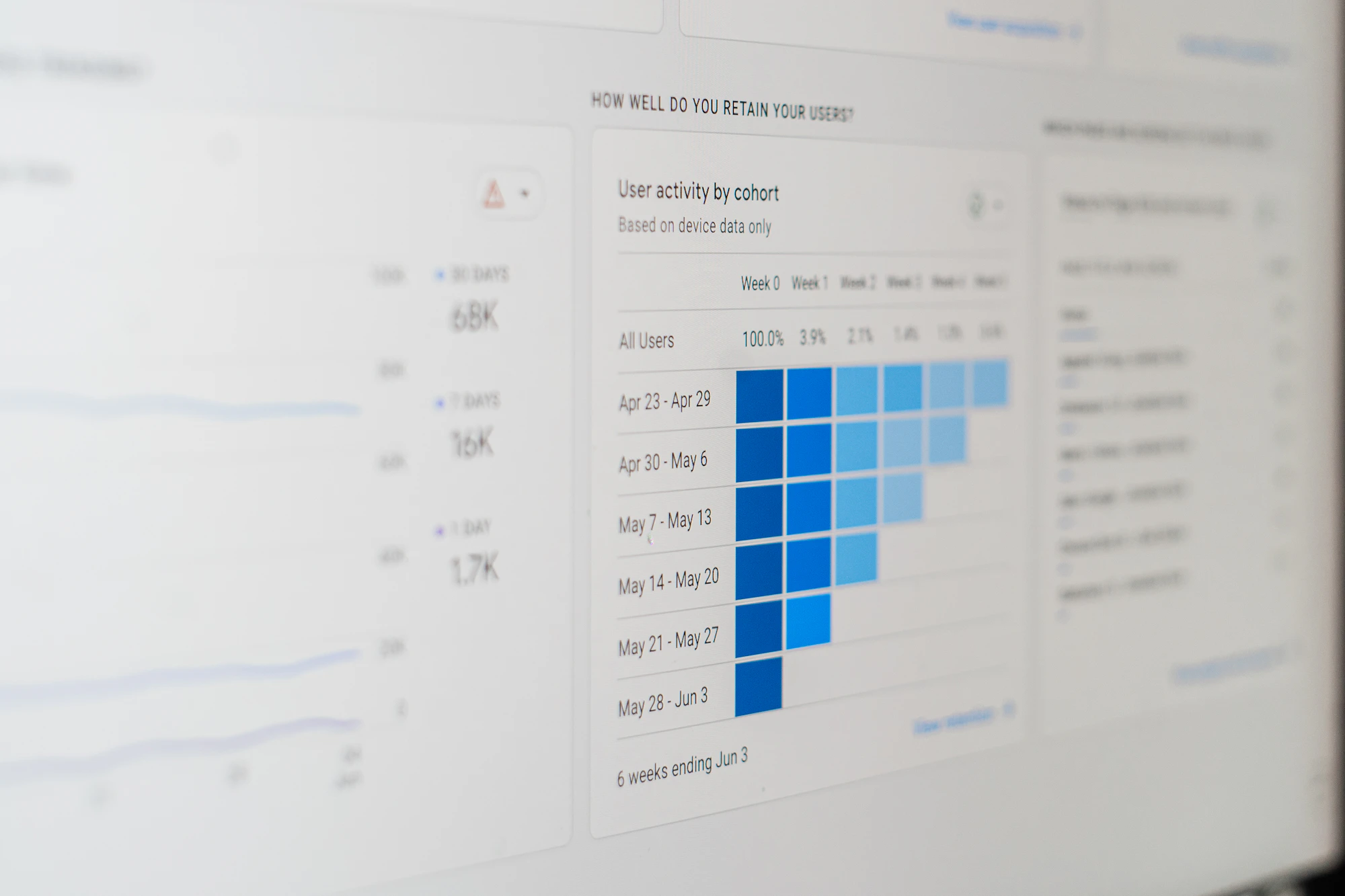
The result? You're looking at conflicting stories. Google says it drove 40 conversions. Facebook claims credit for 35 of the same ones. Your email platform insists it generated 22. Add those up and you've suddenly got 97 conversions when your CRM only logged 42 actual sales.
This isn't a minor accounting error: it's the foundation of every marketing decision you'll make this quarter. Without clean, validated data, your entire digital marketing audit becomes an exercise in creative fiction.
The 5-Step Framework to Fix Your Tracking (And Stop Wasting Budget)
Here's your actionable roadmap to get accurate metrics and rebuild trust in your data. No fluff, no theory: just practical steps you can implement this week.
Step 1: Set Clear Audit Objectives
Before you dive into spreadsheets and dashboards, anchor your audit to 2-3 specific business questions. Vague objectives like "improve marketing performance" won't cut it. Instead, ask precise questions tied to actual business problems:
- "Why has our cost-per-acquisition increased 34% in the last quarter?"
- "Which channels are genuinely profitable after we remove platform attribution bias?"
- "Where are we duplicating spend across retargeting campaigns?"
These questions give your audit direction and prevent you from drowning in irrelevant data points. They also make it easier to justify the time investment to stakeholders who want results, not spreadsheets.
Photo by UNS__NSTUDIO on Unsplash

Step 2: Gather and Validate Your Data
This is where most audits fall apart. You need to pull data from every marketing channel you're using: Google Ads, Meta, email platforms, affiliate networks, organic search, everything. But here's the critical bit: don't just export and combine the data.
Use a cross-media measurement tool or centralised analytics platform to validate that your numbers are actually accurate. Look for:
- Conversion duplicates: The same transaction being credited to multiple channels
- Missing data: Gaps in your tracking where conversions aren't being recorded at all
- Time zone mismatches: Different platforms recording events at different times
- Cookie consent issues: How iOS privacy updates and GDPR compliance are affecting your tracking
If you're not independently verifying what platforms claim, you're building your strategy on quicksand. This step takes time, but it's the difference between optimising campaigns and throwing money into a black hole.
Step 3: Review Your Marketing Strategy and Spend
Now that you've got validated data, compare your budget allocation to your actual business goals. This is where uncomfortable truths emerge. You might discover:
- 40% of your budget goes to a channel driving 8% of actual revenue
- Your "best performing" campaign only works because it's retargeting people who would've converted anyway
- Organic social posts with £0 spend are generating more qualified leads than your £2,000/month paid social investment
Photo by Yashowardhan Singh on Unsplash

Flag every instance where spending doesn't align with results. Be ruthless. The goal isn't to justify what you're already doing: it's to find the misalignments costing you money every single month.
Step 4: Identify Overlaps and Waste
Here's where you uncover the silent budget killers: duplicated efforts across platforms. Common culprits include:
- Running retargeting campaigns on both Google and Meta that target the exact same audience segment
- Paying for brand keyword clicks when you already rank #1 organically
- Sending promotional emails to people who are already in an active sales nurture sequence
- Bidding against yourself by running overlapping campaigns in Google Ads
For each overlap, estimate the wasted spend. Even small inefficiencies add up fast. A £15/day overlap across three campaigns becomes £1,350 of pure waste over a quarter. Find five of those and you've just freed up £6,750 for channels that actually move the needle.
Step 5: Build a Prioritised Action Plan
Data without action is just expensive wallpaper. Your final step is creating a concrete implementation plan with three components:
- Specific recommendations: "Pause the broad match keywords in Campaign X and reallocate budget to high-intent phrase match terms"
- Assigned ownership: Who's actually responsible for making each change?
- Success metrics: How will you measure whether the fix worked?
Prioritise recommendations by potential impact and ease of implementation. Quick wins build momentum. Fixing a major tracking gap might take three weeks of dev work, but pausing that wasteful retargeting overlap takes five minutes and saves money immediately.
Photo by Berkay Gumustekin on Unsplash

The Real Cost of Ignoring This
Let's be honest about what happens when you skip this process. You keep making decisions based on faulty data. You increase budgets on underperforming channels because the platform dashboard looks promising. You cut investment in channels that are actually working because the attribution is messy.
Over six months, those compounding errors don't just waste money: they fundamentally distort your understanding of what works for your business. You end up optimising for platform metrics instead of actual business outcomes.
The uncomfortable reality is that most businesses are operating with broken tracking right now. If you've merged multiple analytics accounts, updated your website recently, changed email platforms, or simply haven't audited your tracking in 18 months, there's a strong probability your data is compromised.
Moving Forward with Confidence
Once you've completed this five-step framework, you'll have something rare in digital marketing: confidence in your numbers. You'll know which channels genuinely drive revenue, where your budget is being wasted, and what "good performance" actually looks like for your business.
That confidence transforms how you make decisions. Instead of second-guessing every campaign adjustment or nervously increasing budgets based on platform-reported metrics, you'll have validated data backing every move. You'll catch problems faster, scale successes more aggressively, and sleep better knowing your marketing investment is based on reality, not algorithmic storytelling.
If you need structured guidance on conducting a comprehensive digital marketing audit beyond just tracking, The Digital Academy's resources provide frameworks designed specifically for UK businesses navigating these exact challenges.
The question isn't whether your metrics are lying to you: it's how much that deception is costing you. Run this audit, fix your tracking, and stop haemorrhaging budget on decisions built on dodgy data. Your finance team will thank you.